This is my second post on stamp-wallpapers.
All images are free to use, as far as I know. Maybe they will be on your destop too...


More wallpapers will follow...
This is my second post on stamp-wallpapers.
All images are free to use, as far as I know. Maybe they will be on your destop too...
More wallpapers will follow...
Since inflation continues in Venezuela, and the number of zeros become numerous again, a reform of the BsS was introduced in 2020, when again a 1,000,000-note was printed.
The new name : Bolívares Digitales replaced 1,000,000 BvS (or 10,000,000,000,000 BvF) by 1 BvD.
Unlike the name suggests, the notes are really printed paper money (not digital).
The 1 BvD still has the old valuta of 1 million boliváres soberanos, but the higher denominations, issued from April 2021 on, are in the new system.
The first note issued in the new 'currency' is the 5 BsD.
5 is easier to count with then the 5,000,000 before, at the time of issue, 5 millions soberanos, represented hardly one US dollar.
 |
| 5 BvD |
 |
| reverse side of 5 Bolívares Digitales |
A first note of 10 BsD and a second one of 20 BsD, have already a ten- and twentyfold of the note issued 7 months earlier.


Serial number on the 10 BsD is here a B (second emission) but on the 20 BsD, we see an X.
Damaged notes or erronous notes cannot be brought into circulation, and are replaced by another note, to avoid that the same serial number would appear on two notes.
This series of notes that replace a damaged one, start with an X. Other countries have different systems to indicate a note is a replacement note (i.e. with a star-marking, Z-serial letter, ...)
Replacement notes have the same value when in circulation, but are part of a smaller number of issued notes.
As you see on the note, the serial number starts with 3 zeros, in this case, there are about 2 thousand replacement notes issued.
At the reverse side, we see the same image as the previous 1 BsD (1 million BsS) note.
 |
| reverse side of 10 and 20 BsD |
and the story continues...
The first stamp ever issued, was the Black Penny in the UK.
This happened in 1840. In the first ten years, only few countries followed this idea, where the cost of sending a letter was no longer paid by the receiver of the mail, but by the sender.
Two Swiss cantons, Zürich, and later Geneva, followed by Brazil, joined the system in 1843.
In 1847, the first US-stamp was issued, and the isle of Mauritius has its first stamp too in that year.
Bermuda issued its first stamp in 1848, and in 1849, 3 European countries, France, Belgium and Bavaria (independent at that time), closed the list of the 10 countries that issued stamps before 1850.
Belgium was a relatively young country in 1849.
In 1815, after the lost of Napoleon in Waterloo, 'The Netherlands' got independent.
The forced 'marriage' between the mainly protestant, and Dutch speaking north, and the catholic, french bourgeoisie in the south, didn't last very long. In 1830 both parts split up, the north remains 'the Netherlands' while the southern part becomes Belgium.
Leopold of Saxe-Coburg-Saalfeld (later Saxe-Coburg and Gotha) who rejected the Greek throne in 1830, became Belgium's first King in 1831.
Yes, we survived a year without king, between 1830 and 1831, as well as we survived 541 days without newly elected gouvernment in 2010-2011 (world record!)
Under Leopold I, the first railway line (Brussels-Mechelen) was established in 1835, and the first postal stamp was introduced in 1849.
 |
| Belgium's first 1849 |
The stamp was lithographed by Charles Baugniet (1814-1886) after a painting by Liéven De Winne (1821-1880).
 |
| Leopold I by Liévin De Winne |
This first issue of Belgium's postal stamps is called 'the epaulettes' (shoulder pads).
The watermark is the monogram of the king, an intertwined letter L.
 |
| Monogram Leopold I |
 |
| watermark intertwined L - Belgium |
This stamp of 10 cents (brown), was followed by a 20 cents (blue).
Catalog prices for a cancelled stamp are around € 100 for a nr. 1 and € 50 for a nr. 2.
To be continued...
By 23 April 2020, the exchange rate for the Venezolan Bolívar Soberano, was 1 USD = 144,697 BsS.
One day later it was already 1 USD = 171,140 BsS
New notes were needed once again...
Similar to the notes issued in 2019, the 2020 notes are predominal in one colour.
The many zeros on the new notes (200,000 - 500,000) are replace by the word MIL (thousand).
 |
| 200,000 BsS |
 |
| 200,000 BsS - verso |
 |
| 500,000 BsS |
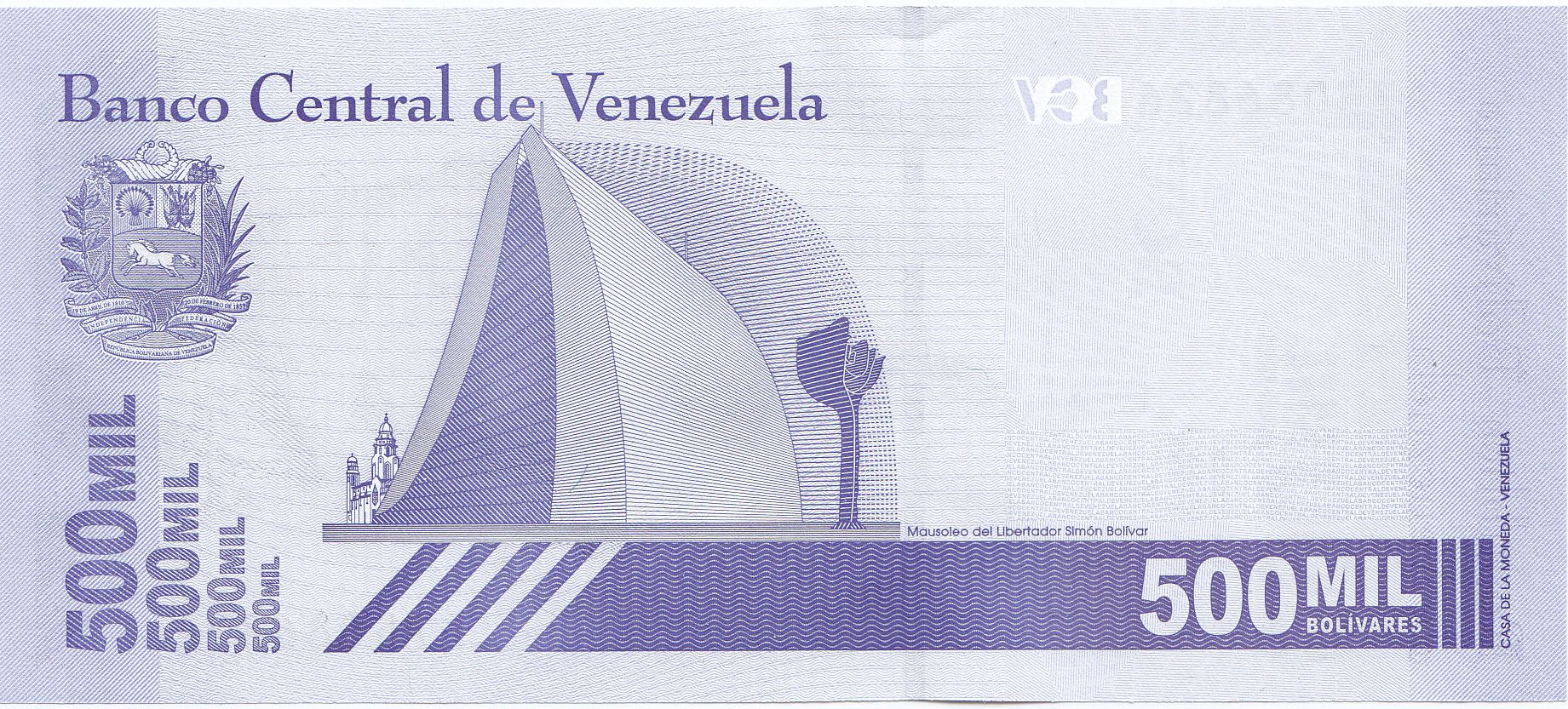 |
| 500,000 BsS - verso |
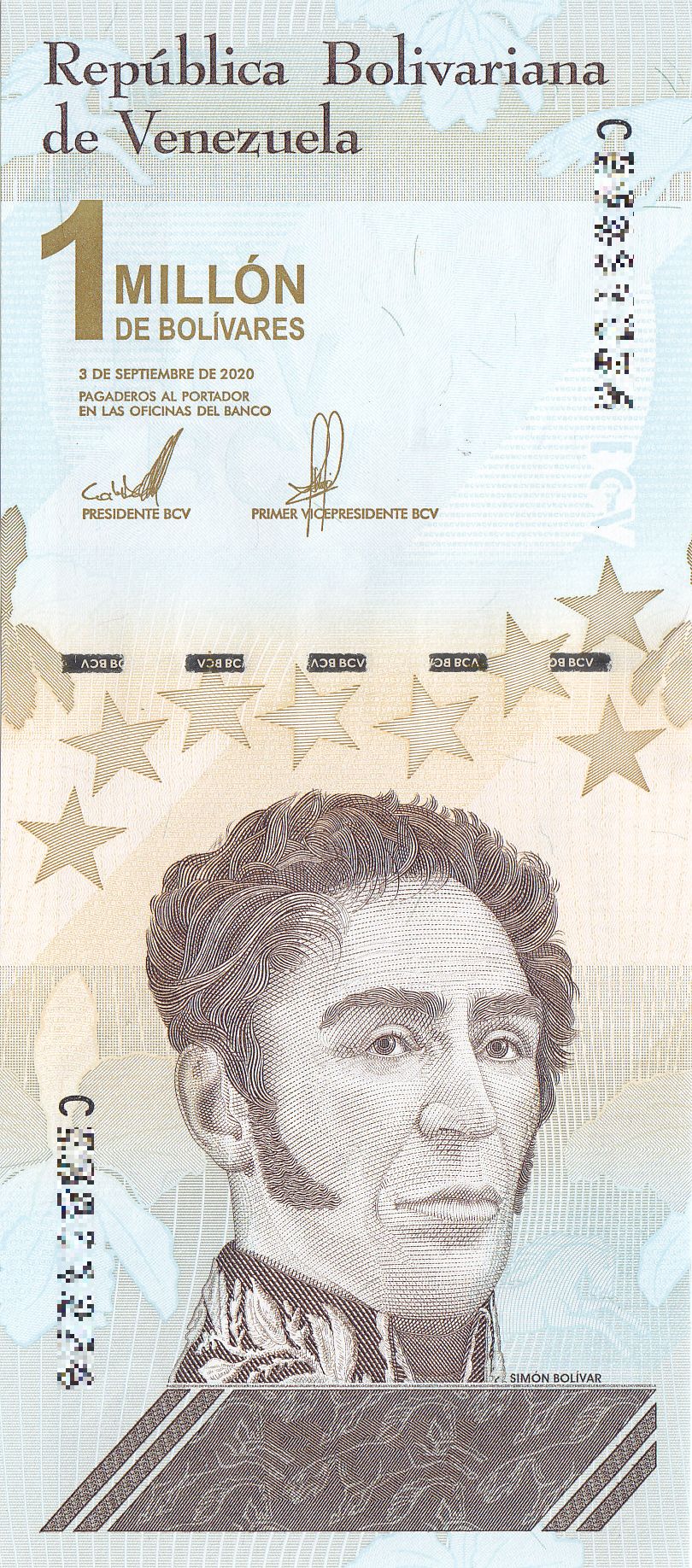 |
| 1,000,000 BsS |
 |
| 1,000,000 BsS - verso |

The banknotes in use in Venezuela, in 2018 had a 500 Bolívares Soberanos as highest denomination.
Since the Boliváres "soberano" already replaced the previous 'Bolívares Fuertes' by 100,000 to 1, this 'high value' note, represented 500,000,000 of the old units.

And yet, in 2019 the need for even higher face values was so urgent, that 3 new banknotes had to be issued.
The Venezolan national bank skipped the logic line of notes, and did not issue a 1000, 2000 or 5000 note, but issued directly a 10,000 BsS note, replacing 20 of the highest value notes in circulation.
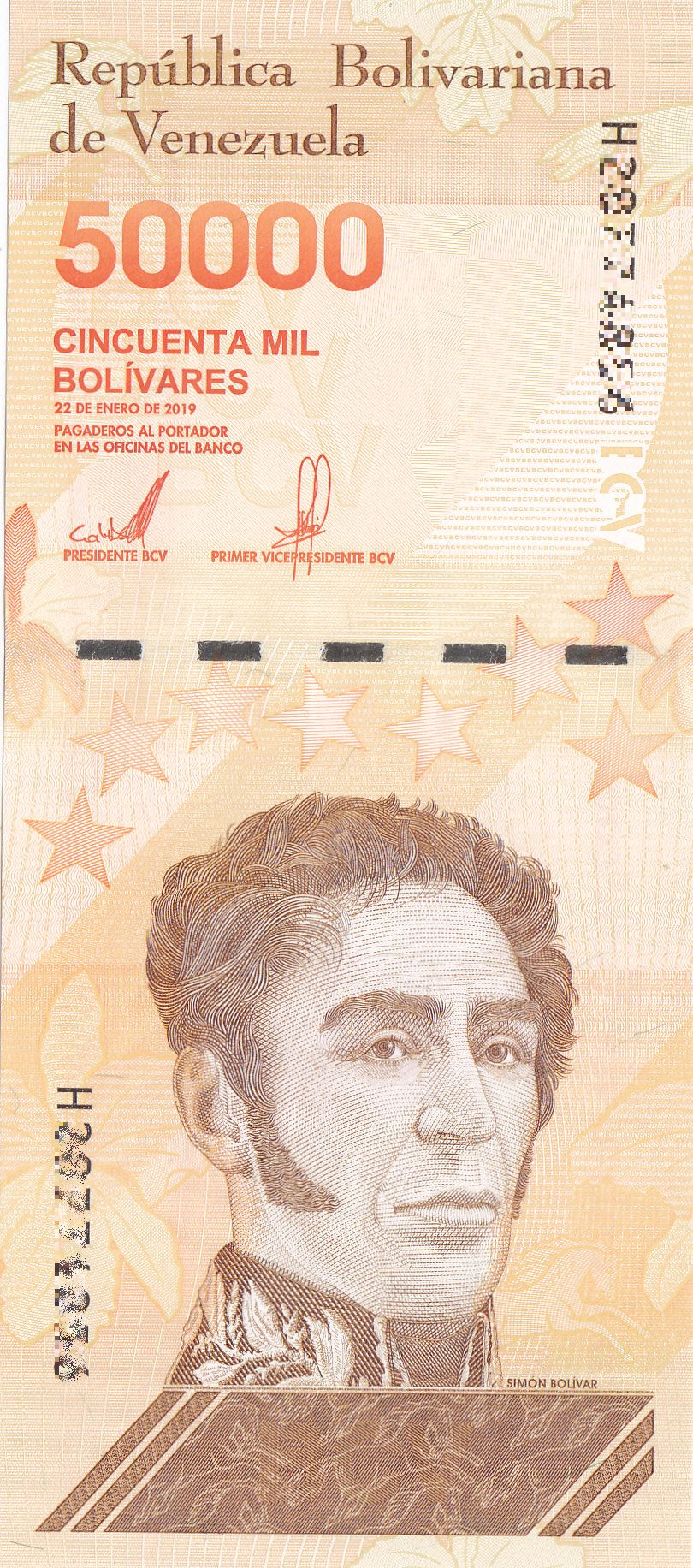
At the same time, also a 20,000 BsS and a 50,000 BsS note were issued.
 |
| 10,000 BsS - 2019 |
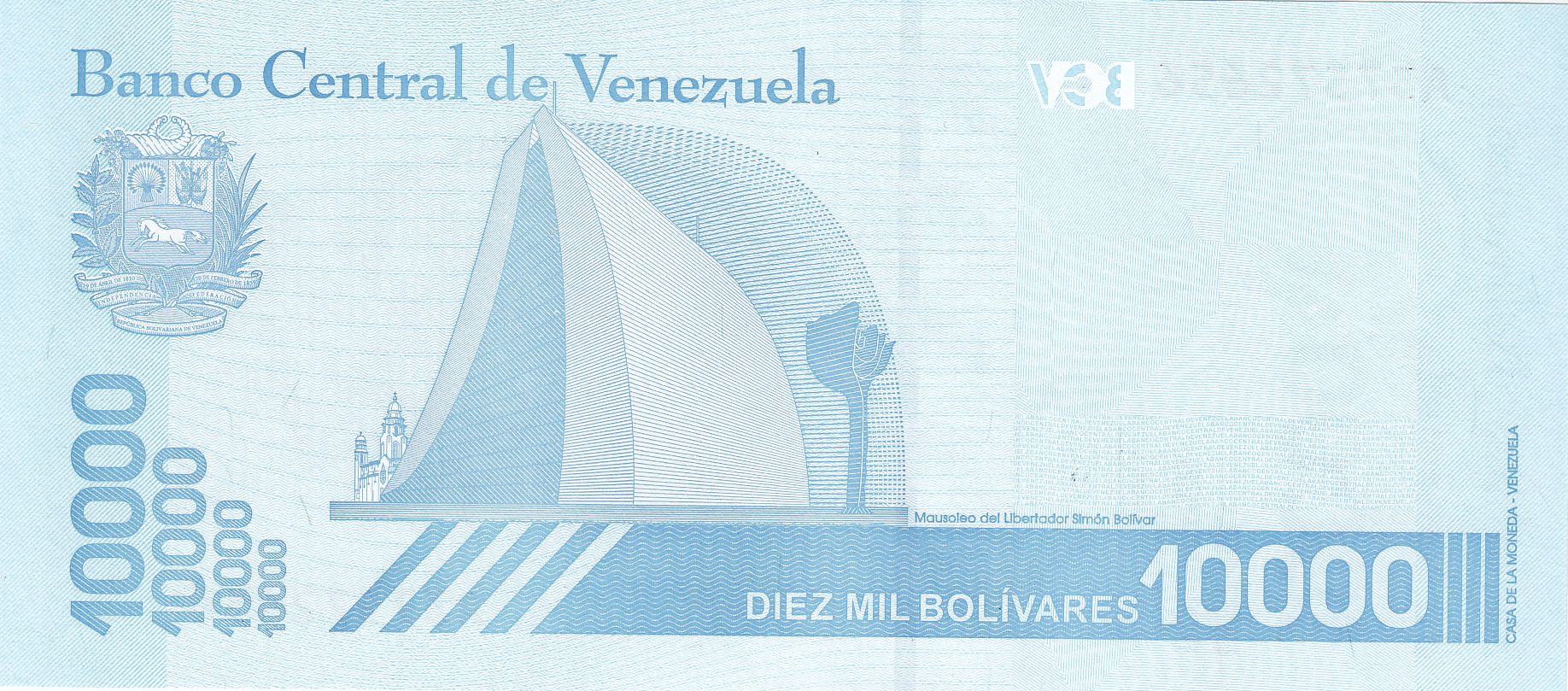 |
| 10,000 BsS - 2019 reverse |
 |
| 20,000 BsS - 2019 |
 |
| 20,000 BsS - 2019 reverse |

In 2022, the majority of Europe is used to travel abroad and use one currency in nearly all European countries. 20 years ago, 12 countries started to use the common currency and left their own national valuta.
Meanwhile, the design of the notes has changed, and more countries has joined the Euro-zone.
To celebrate this second decade of euro money, Belgium has issued a commemorative 0-euro note.
 |
| United in Diversity - 20 years EURO |
On the 0-euro note, that was issued in 20,000 copies, we see the map of Europe, with all countries that use the Euro-currency, in a dark colour.
 |
| Detail 20 years Euro |
From Finland in the north, to Cyprus in the south east.
The text 'United in Diversity' is written in English. A bit strange, since except for Ireland and Malta, English is not an official language in any of the other countries in Europe.
to be continued...
The Swedish post has a long tradition of very nicely designed stamps.
Despite that, or maybe because that, they also emitted a set of 12 stamps in 1999, dedicated to the zodiac signs.
 |
| Zodiac signs Sweden 1999 A |
 |
| Zodiac signs Sweden 1999 B |
Each stamp is triangular, and six of them form a hexagon.
The colours are alternatively light blue and brown/yellow, on a dark blue background.
All stamps mention 'Brev Inrikes' which means the stamp is ment for use within Sweden only.
On each stamp, we find the name in Swedish as well.
Note that the indefinite article in Swedish, is placed behind the word.
| Constellation | English Name | Swedish Name | Dates |
|---|---|---|---|
| Aries | the Ram | Väduren | Mar. 21–Apr. 19 |
| Taurus | the Bull | Oxen | Apr. 20–May 20 |
| Gemini | the Twins | Tvillingarna | May 21–June 21 |
| Cancer | the Crab | Kräftan | June 22–July 22 |
| Leo | the Lion | Lejonet | July 23–Aug. 22 |
| Virgo | the Virgin/the Maiden | Junkfrun | Aug. 23–Sept. 22 |
| Libra | the Balance / the Scales | Vågen | Sept. 23–Oct. 23 |
| Scorpio | the Scorpion | Skorpionen | Oct. 24–Nov. 21 |
| Sagittarius | the Archer / the Centaur | Skytten | Nov. 22–Dec. 21 |
| Capricorn | the Goat(-fish hybrid) | Stenbocken | Dec. 22–Jan. 19 |
| Aquarius | the Water Bearer | Vattumannen | Jan. 20–Feb. 18 |
| Pisces | the Fishes | Fiskarna | Feb. 19–Mar. 20 |
 |
| Gemini (Tvillingarna) |

